
Yoga Poses for Chest Expansion and Posture for Patients with CF
by Jhoanna Rae Marquez, PT, DAC, INHCPosture and breathing affect each other more than most people realize. When the chest feels tight and the upper back stays rounded, it can feel harder to take a full breath, keep good alignment, and stay comfortable through airway clearance or exercise. That is why gentle yoga can be useful. It gives you a simple way to work on chest opening, upper back mobility, and body awareness at the same time.
Keep it simple. The goal is to use a few steady positions that help you feel less stiff, more upright, and a little freer through the chest and ribs. A recent review on physical activity and exercise in cystic fibrosis supports exercise as part of regular CF care, and a 2021 study on postural exercises added to chest physiotherapy in pediatric CF found that this kind of work may help with emotional well being and treatment follow through. The BreathStrongCF chest wall tightness article also explains why daily chest wall mobility matters when coughing and protective posturing starts to make the chest feel stiff.
Try these:
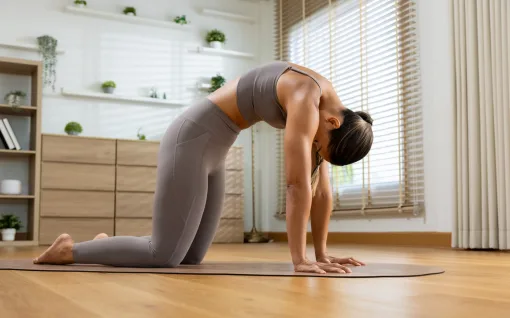
Cat cow.
It gently moves the spine between rounding and opening, which can help the rib cage move more easily. Think of it as a warm up for the chest and upper back, not a stretch to force.
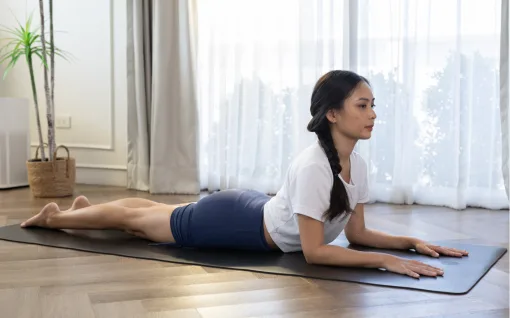
Sphinx pose.
Lying on your stomach with your forearms down and chest gently lifted can encourage a small amount of upper back extension. For many people with CF, that helps counter the slumped shape that can build up after a lot of coughing, sitting, or fatigue.
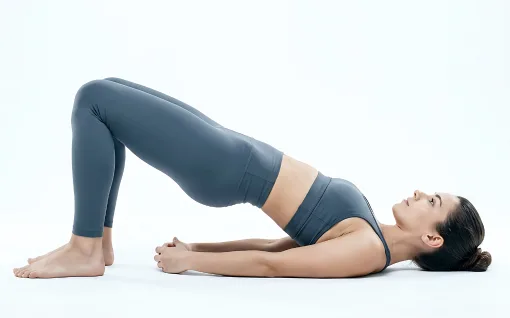
Bridge pose.
It helps open the front of the body while also waking up the back of the hips and trunk. That matters because posture is not only about stretching the chest. It is also about giving the back side of the body enough support to hold you upright with less strain.
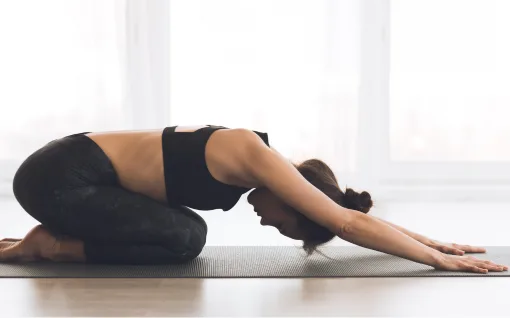
Child’s pose.
With arms reaching forward can help lengthen the sides of the trunk and give the back a break. Some people feel their breathing settles better here, especially if they focus on a slow exhale.
A simple seated or standing chest opener can be enough too. Sitting tall with the hands gently behind the body or standing with the forearms resting on a wall or doorway, can give the chest a mild opening without turning it into a big stretch. The CF Physio postural advice page explains that maintaining flexibility of the upper back and rib cage may help with lung expansion in people with CF.
It’s okay to modify!
If your chest feels tight, make the pose smaller. You do not need a big backbend benefit. A folded towel under your chest, a yoga block under your hands, or doing the pose at the wall can make it more comfortable and more realistic.
If fatigue is an issue, keep the session short. Two or three poses done with a calm pace can be enough. You can also do them sitting in a chair or standing at a wall instead of getting up and down from the floor.
If your low back gets sore, that is usually a sign to reduce the depth and focus more on length than lift. In bridge, keep your hips lower. In sphinx, think about reaching the head forward and keeping the belly supported. In chest openers, let your upper back do more of the work instead of pushing into the lower back. A 2025 review on chronic low back pain management notes that yoga may help pain and function, but the approach works best when poses are adapted to the person rather than pushed past comfort.
Try this routine!
- Cat cow for 5 to 8 slow rounds
- Child’s pose for a few breaths
- Sphinx for 3 to 5 easy breaths
- Rest.
- Bridge for 5 gentle reps
- Seated chest opener and a slow breathing pause
The point is to feel more open and less tense, not stretched out to the limit.
A short safety note matters here. Avoid yoga during a flare, chest pain, dizziness, or after a recent pneumothorax unless your care team has cleared it. If a pose makes breathing feel harder, increases pain, or leaves you more wiped out instead of more comfortable, stop and switch to something easier. This kind of practice should support breathing, not compete with it.
Yoga can be one more tool to help the chest feel less tight and posture feel less effortful. Keep it simple, make it fit your body, and treat the pose as useful only if it helps you breathe and move a little easier.